

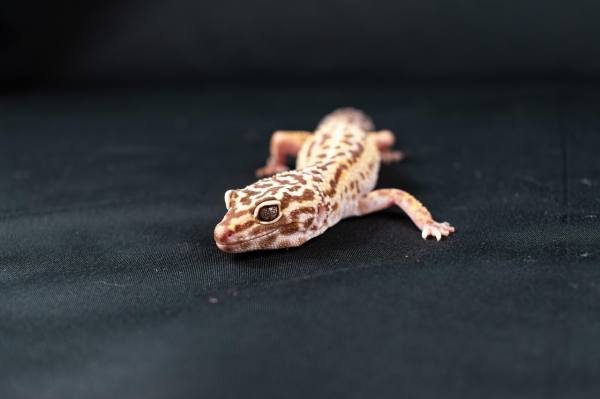
Many lizards have nanoscopic hairs covering their bodies. A study by Kiel University shows that these structures may help them survive in the desert.
Many lizards have nanoscopic hairs covering their bodies. A study by Kiel University shows that these structures may help them survive in the desert.
In a dry shrubland, a gecko’s greatest danger can be dehydration. Its skin is paper thin; water can evaporate from its body into the dry air more quickly than it can replenish it. Fortunately, evolution has given it an adaptation: thin, nanoscopic hairs, called setulae, that cover its body and trap moisture.
While scientists have known about setulae for years, but their precise function has remained unclear. However, they show up often in species of geckos and chameleons that live in arid or semiarid environments. This led researchers at Kiel University (CAU) to ask whether setulae might help reduce water loss through the skin. Their findings have now been published in Biointerphases, an AVS journal published by AIP Publishing.
Read More: Christian-Albrecht University of Kiel
Photo Credit: niki_emmert via Pixabay


