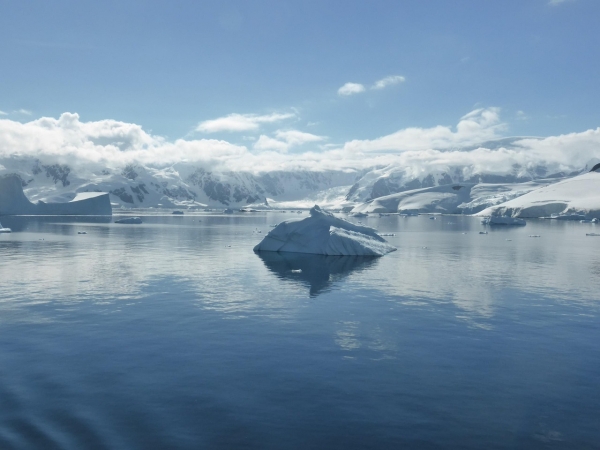
Rapid series of low-pressure systems can cause weather conditions under which the ice can only hardly recover.
Rapid series of low-pressure systems can cause weather conditions under which the ice can only hardly recover. This affects Arctic coastlines and the global climate system.
In the Arctic, the weather plays a key role in determining how much ice covers the ocean. One weather phenomenon that has a significant influence on this is Arctic cyclones: they cause unusually warm and stormy conditions, which typically lead to a significant loss of ice. These conditions last for a particularly long time when several cyclones rapidly follow one another. An international research team led by the Alfred Wegener Institute has now, for the first time, systematically investigated the effects of these accumulating cyclones, using weather data from recent decades. In the journal Nature Communications, they have described this ‘cyclone clustering’ and its specific consequences for the future of sea ice and, by extension, the Arctic coastline.
‘Cyclone clustering’ occurs when several low-pressure systems rapidly pass through a particular area one after another, causing storms that are more severe and last longer than ‘normal’ storms. “In Europe, such events have frequently led to significant damage in the past due to high winds, heavy rainfall or high tide levels along the coast,” says Dr Lars Aue, lead author of the study from the Alfred Wegener Institute, Helmholtz Centre for Polar and Marine Research (AWI).
Read More: Alfred Wegener Institute, Helmholtz Centre for Polar and Marine Research
Photo Credit: MartinFuchs via Pixabay