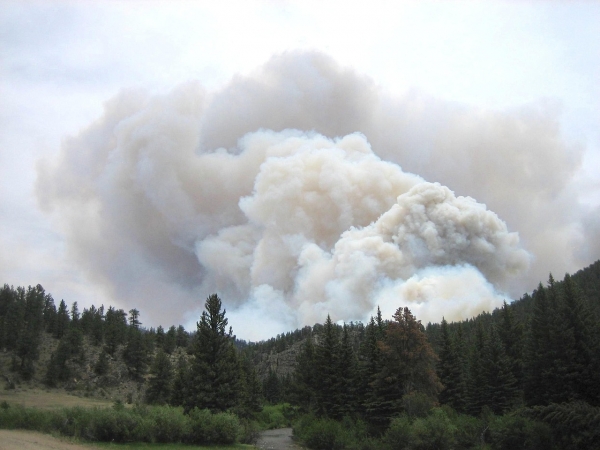
For ecosystems, a forest fire does not end where the flames stop.
For ecosystems, a forest fire does not end where the flames stop. A new study shows that the smoke reduces bird diversity even outside the areas that actually burned. This ensuing effect becomes apparent in the following breeding season.
When forests burn, the direct consequences are obvious: houses go up in flames and habitats are destroyed. The damage caused by the smoke that extends far beyond the fire area is less visible. Sarah Meier, an environmental economist at ETH Zurich, investigated this in relation to avian populations in the US together with Eric Strobl from the University of Bern.
This involved the researchers factoring in data from the North American Breeding Bird Survey, a long-term programme running since 1966 to monitor bird populations in North America. Each year, trained volunteers count all the birds they see or hear along fixed routes, each around 40 kilometres long, at some 50 stops. Meier and Strobl analysed data from around 2,800 such routes in the US over a 15-year period, from 2008 to 2022, and combined it with high-resolution data on particulate matter pollution from wildfires.
In addition to the number of species, they also examined how evenly the birds were distributed across different species and how much these species differed from one another in evolutional terms.
Read More: ETH Zurich
Photo Credit: Pixabay