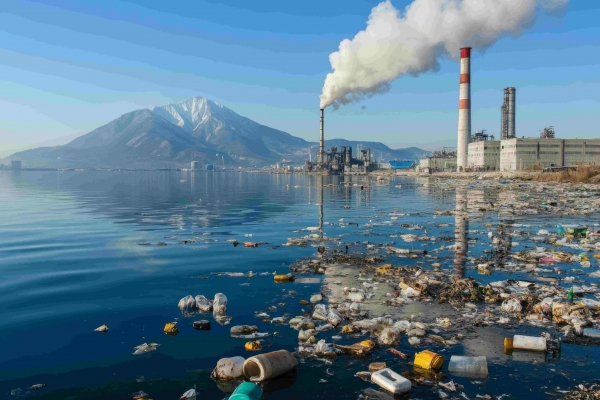
Our oceans are in trouble and new research from Flinders University shows how changes in diatoms (microalgae) could further undermine the foundation of aquatic life’s food webs – as well as vital deep-sea carbon capture or sequestration.
Our oceans are in trouble and new research from Flinders University shows how changes in diatoms (microalgae) could further undermine the foundation of aquatic life’s food webs – as well as vital deep-sea carbon capture or sequestration.
A new study published in Marine Ecology used high-tech methods to test common microalgal species to assess how various stressors, including acidification from excessive carbon dioxide (CO₂) levels, affect absorption of trace metals and therefore undermine their overall health and role in Earth’s carbon cycling.
Although microscopic, the single-celled algae diatoms that live in oceans, lakes, rivers and even damp soil are among the most important organisms on Earth as they produce a significant portion of oxygen in the atmosphere.
Read More at: Flanders University
Photo Credit: Tung Lam via Pixabay