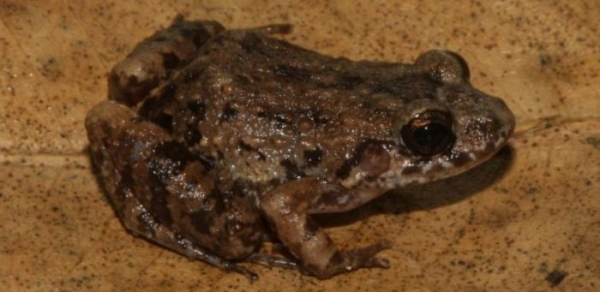
Identified in western Acre, Adenomera varcena reveals a hidden diversity that could be confirmed only through call and DNA analyses.
Identified in western Acre, Adenomera varcena reveals a hidden diversity that could be confirmed only through call and DNA analyses.
Scientists from Brazil and other countries have discovered a new species of frog in the flooded forests of the western Amazon. They named it Adenomera varcena. This finding significantly advances our understanding of Amazonian biodiversity and cryptic diversity, or cases in which two or more animals appear identical but are actually different species. To distinguish this species, the researchers analyzed details such as the frog’s call and DNA.
The results were published in the journal Ichthyology & Herpetology. The authors of the article include Célio F. B. Haddad, a professor at São Paulo State University (UNESP), and Thiago R. Carvalho, a professor at the Federal University of Minas Gerais (UFMG). Both are members of the team at the Center for Research on Biodiversity Dynamics and Climate Change (CBioClima) – a Research, Innovation, and Dissemination Center (RIDC) funded by FAPESP.
The discovery resulted from expeditions conducted in the Upper Juruá River region in western Acre, specifically in forest fragments near the Moa and Crôa rivers, close to Cruzeiro do Sul. To confirm that this was a new species of frog, the researchers cross-referenced various pieces of information. They examined DNA analyses, call recordings, body shape (morphology), habitat data, and compared it with specimens already preserved in scientific collections.
Read More: Fundação de Amparo à Pesquisa do Estado de São Paulo
Image: In addition to expanding scientific knowledge about Neotropical amphibians, identifying new species has a direct impact on conservation strategies (Credit: CBioClima)