

A few days of rain does not change the low groundwater levels after a long drought.
A few days of rain does not change the low groundwater levels after a long drought. To better determine how groundwater systems recover after a drought and which groundwater reserves are most vulnerable, hydrologist Sandra Hauswirth developed a method to classify groundwater systems based on their ability to recover from long drought. With a very high resolution global groundwater model (1 kilometer) it was possible to determine and analyse how a groundwater system responds during a drought and how quickly it can recover. This provides policymakers with the means to better respond to or prevent severe groundwater problems in the future.
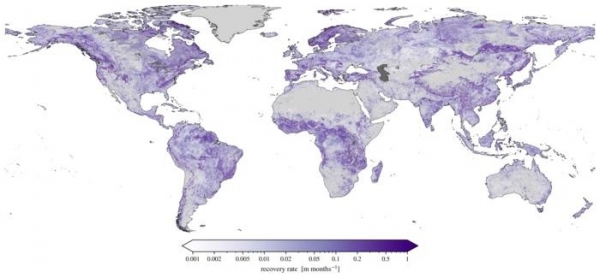
Hauswirth investigated the various factors that make the groundwater recover or not after a period of drought by looking at a large range of groundwater drought events around the globe. Climate plays a major role, but at the local level the geology and landscape are additional important factors for drought recovery. Looking at these different drivers, she was able to make a classification in groundwater systems. It turned out that the majority of locations has resilient groundwater systems (57%), exhibiting rapid and robust recovery following droughts. Vulnerable (15%) and stable locations are shaped by geophysical constraints and heightened climate variability, whereas unstable regions (26%) are characterised by frequent, successive drought events leading to a reduced drought recovery capacity and strong impacts on the groundwater system.
Read More: Utrecht University
Image: The average groundwater recovery rate [m/month] is shown, with darker regions indicating locations that recover quickly from droughts, compared with lighter-coloured regions, which show slower recovery. Areas in grey represent locations that were filtered out during the analysis. (Credit: Utrecht University/Environmental Research Water)


