

The ubiquitous plastics of modern life are degrading into tiny fragments and littering Earth’s landscapes and waterways.
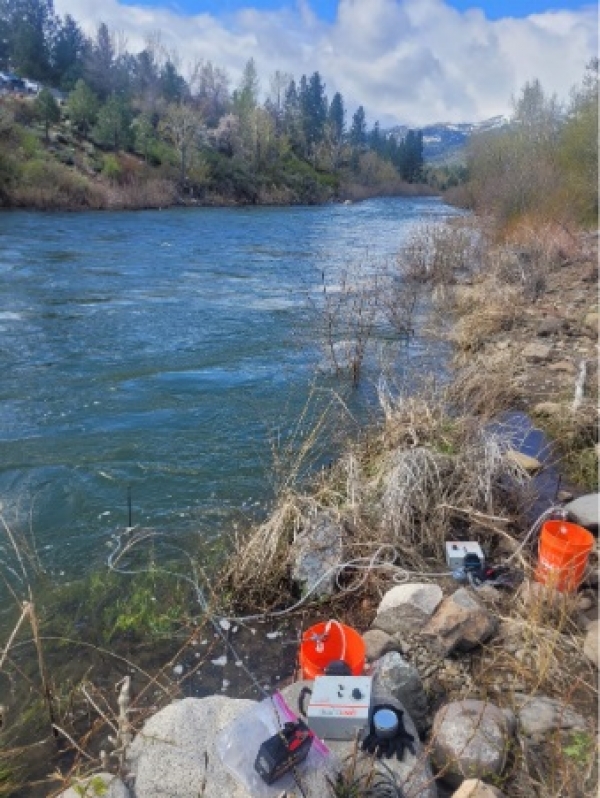
The ubiquitous plastics of modern life are degrading into tiny fragments and littering Earth’s landscapes and waterways. Scientists are starting to examine and measure this phenomenon to better understand how microplastics move through the environment and ultimately impact human and environmental health. A new study focuses on the Truckee River, which stems from the clear blue waters of Lake Tahoe and traverses through Reno and Sparks, Nevada, before reaching Pyramid Lake. The research sought to illuminate the concentrations and types of plastics accumulating throughout the river — which supplies drinking water to nearly half a million people.
Published September 15th in ACS EST Water, the research was led by Hannah Lukasik, former master’s student at DRI and the University of Nevada Reno. She was mentored by Monica Arienzo, Director of DRI’s Microplastics and Environmental Chemistry Lab. The group sampled microplastics at several sites upstream and downstream of Reno, Nevada, in fall 2022 and spring 2023. Microplastic concentrations were nearly ten-fold higher in spring (mean 3.7 microplastics/liter) than in fall (mean 0.4 microplastics/liter), when higher spring flows are likely flushing them from the landscape and river bottom. Polyethylene (used for things like plastic shopping bags, milk jugs, and plastic wrap) and polypropylene (a sturdier plastic used for things like medical equipment, storage totes, and automotive parts) were the dominant plastics identified. The research demonstrates that reducing single-use plastic throughout the Truckee River Basin is critical for protecting the river’s water quality.
Read More: Desert Research Institute
Microplastic sampling along the Truckee River. (Photo Credit: Desert Research Institute)


