

For decades, fisheries managers have struggled to restore wild populations of lake trout recruitment across the Great Lakes region, with limited success.
For decades, fisheries managers have struggled to restore wild populations of lake trout recruitment across the Great Lakes region, with limited success. Returning this species to its former abundance is hampered by overfishing, sea lamprey predation, invasive species, and habitat alterations.
A potential barrier to recovery is Thiamine Deficiency Complex (TDC), a disorder caused by insufficient vitamin B1, or thiamine. This syndrome is considered a major threat to conservation and restoration efforts widely.
TDC can cause severe behavioral and neurological abnormalities and extremely high mortality of newly hatched fish. It is typically observed in hatcheries that rear salmon and trout egg obtained from wild populations, and hatchery staff can mitigate its effects using thiamine treatments.
Read more at: University of Vermont
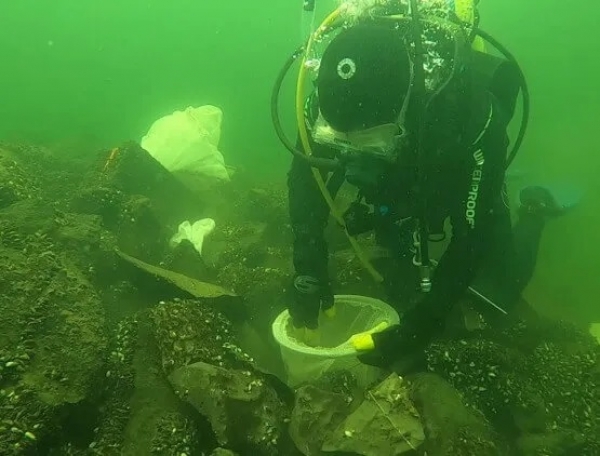
Dr. Matt Futia deploying egg bags for rearing lake trout in Lake Champlain (Photo Credit: University of Vermont)


