Forest expansion and thickening after British colonisation has created landscapes more prone to burning, amplifying the influence of climate change and propelling Australia’s bushfire crisis, a new study has found.
Forest expansion and thickening after British colonisation has created landscapes more prone to burning, amplifying the influence of climate change and propelling Australia’s bushfire crisis, a new study has found.
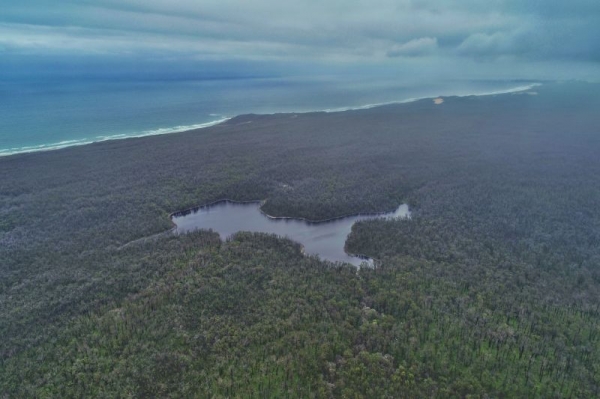
Published today in Nature, University of Melbourne researchers, in collaboration with Gunaikurnai Land and Waters Corporation, reconstructed the past 1000 years of vegetation, fire and erosion in Croajingolong National Park in East Gippsland, one of southeastern Australia's most fire-prone forests.
The researchers found that colonialisation drove cascading changes: increased fire temperature, a four-fold increase in eucalypt cover, transformation from an open woodland to forest, and increased soil erosion.
Read More: The University of Melbourne
Aerial view of Purghagoolah (Lake Elusive) located within the Croajingolong National Park looking northwest. (Photo Credit: Michael-Shawn Fletcher)