

A new framework designed to guide one of the hardest decisions in conservation—whether to move a species outside its historical range to save it from extinction—has been published in Conservation Science and Practice, capping a multi-year, Pacific-wide effort in which the University of Hawaiʻi at Mānoa played a central supporting role.
A new framework designed to guide one of the hardest decisions in conservation—whether to move a species outside its historical range to save it from extinction—has been published in Conservation Science and Practice, capping a multi-year, Pacific-wide effort in which the University of Hawaiʻi at Mānoa played a central supporting role.
The framework helps managers to decide whether a “conservation introduction” that moves a plant or animal outside its historic range is the right call, and how to do it responsibly.
Professor Melissa Price with College of Tropical Agriculture and Human Resilience (CTAHR)’s Department of Natural Resources and Environmental Management (NREM) and a co-author of the paper, served as a co-principal investigator alongside lead investigator Mark W. Schwartz of the University of California, Davis and the U.S. Fish and Wildlife Service (USFWS) Pacific Region. Price, UH Mānoa graduate students and others helped facilitate community engagement, gathering input from more than 250 people across the Pacific region.
Read More: University of Hawaii
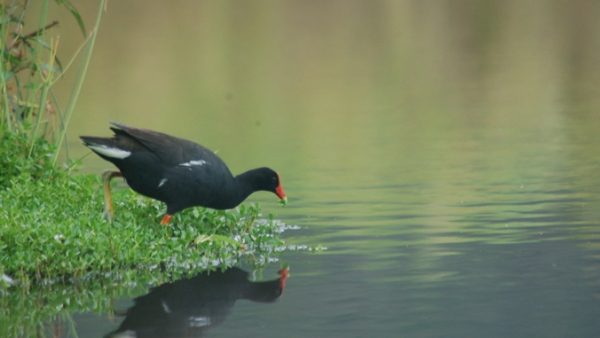
Image: ʻAlae ʻula (Photo credit: Melissa Price)


