UB-led study of ancient sediment offers new insights into ice sheet retreat at the former Cold War outpost.
UB-led study of ancient sediment offers new insights into ice sheet retreat at the former Cold War outpost.
The site of a former U.S. military base in Greenland was ice-free at a time when summers were a few degrees warmer than today, according to a new University at Buffalo-led study of ancient sediment recovered from beneath the site in the 1960s.
Researchers found that summer temperatures at Camp Century — where the U.S. Army pursued a secret Cold War plan to hide nuclear missiles beneath the ice — were 4.7 degrees Celsius (8.5 degrees Fahrenheit) warmer than modern summers during an ice-free period approximately 416,000 years ago.
For the site to have been ice-free, the Greenland Ice Sheet would have had to retreat more than 60 miles from its present-day edge in that region.
Read More: University at Buffalo
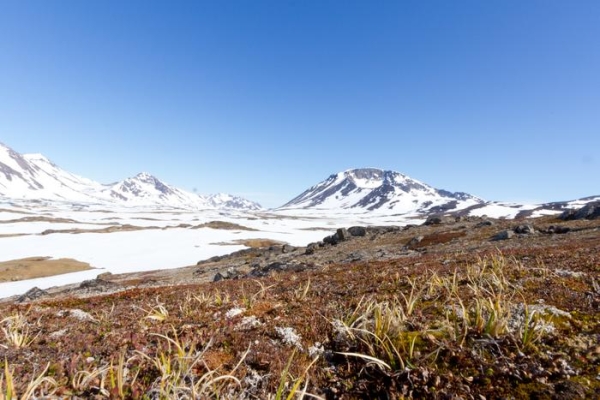
Image: Tundra vegetation is seen on the Greenland landscape in this photo from 2012. A University at Buffalo-led study found that summer temperatures at Camp Century on Greenland were 4.7 degrees Celsisus higher during an ice-free period 416,000 years ago. (Credit: Josh Brown, University of Vermont)