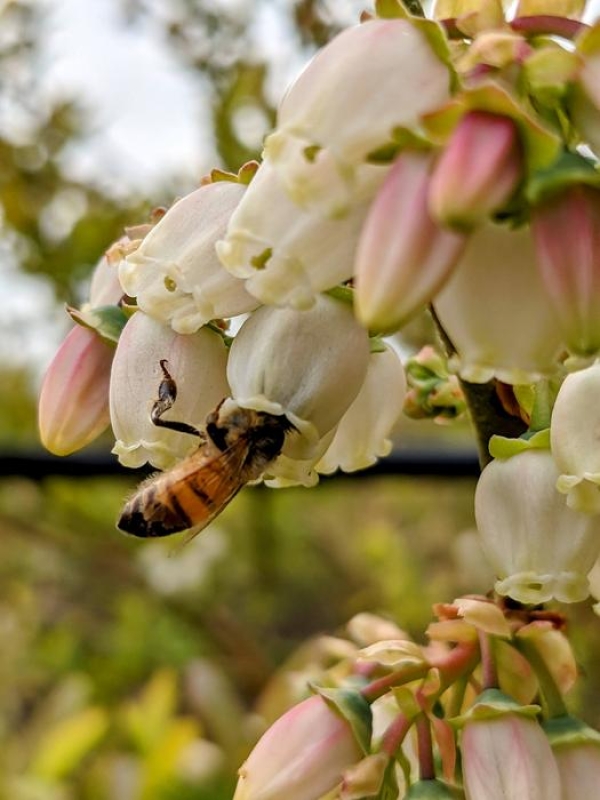
Washington produces more blueberries than any other U.S. state, but farmers sometimes struggle to obtain honey bees to pollinate the plants and produce bountiful, delicious fruit.
Washington produces more blueberries than any other U.S. state, but farmers sometimes struggle to obtain honey bees to pollinate the plants and produce bountiful, delicious fruit.
That’s in part because beekeepers are reluctant to provide bees to blueberry farms, given that there have been increased — and mysterious — bee colony losses after blueberry pollination.
Researchers, however, may have found a solution: a feed that shows promise for boosting the size of bee colonies.
“We don’t know exactly why the losses happen, but fear has led some beekeepers to avoid blueberry pollination season entirely,” said Lisa DeVetter, a professor of small fruit horticulture at Washington State University’s Northwestern Washington Research and Extension Center. “We want to help beekeepers maintain the health of their colonies while also helping blueberry growers produce the best crop.”
Read More: Washington State University
Image: A honey bee pollinates a blueberry flower. Blueberry varieties grown in Washington depend on pollination for optimal berry size and production. Photo courtesy Lisa DeVetter.