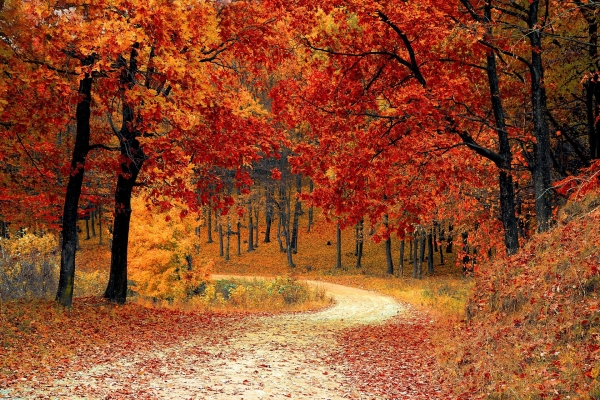
For devout leaf peepers, timing is everything. A new study led by researchers from Duke University’s Nicholas School of the Environment shows that leaf nutrient levels affect the onset of fall color.
For devout leaf peepers, timing is everything. A new study led by researchers from Duke University’s Nicholas School of the Environment shows that leaf nutrient levels affect the onset of fall color. The findings could improve leaf drop forecasts and carbon cycle tracking.
Starting roughly in September in the United States, deciduous trees — species that seasonally drop their leaves — stop making the green pigment chlorophyll, used in photosynthesis. As other pigments become visible, leaves shift to shades of turmeric and crimson before dropping off. By mid-November, most deciduous trees are bare.
That process, called senescence, is a tree’s way of conserving energy for winter. As days shorten, less sunlight is available to leaves to convert carbon dioxide from the air into life-sustaining sugars. Photosynthesis, which is energy-intensive, basically becomes more trouble than it’s worth for several months.
Read More at: Duke University
Photo Credit: Valiphotos via Pixabay