Ocean currents move water around the globe in a vast circulation system.
Ocean currents move water around the globe in a vast circulation system. The Antarctic continental shelf plays an important part in this process. Deep water arriving from the north rises onto the shelf, where extreme cold and the formation of sea ice make it denser. This heavy water then sinks into the deep ocean, helping to form Antarctic bottom water, the coldest, densest and one of the most voluminous water masses in the world's oceans.
As the water crosses the shelf, it encounters abundant marine life and active biological processes. Researchers wanted to know whether these processes change the carbon carried by the water before it sinks into the deep ocean. The answer matters because rising temperatures and declining sea ice could alter how the Southern Ocean stores and transports carbon.
The southern Weddell Sea shelf is an important place for the formation of Antarctic bottom water. Because it is remote and difficult to reach, studying this region depends on specialised research vessels such as the icebreaker Polarstern, operated by the Alfred Wegener Institute, Helmholtz Centre for Polar and Marine Research (AWI).
Read More: Alfred Wegener Institute, Helmholtz Centre for Polar and Marine Research
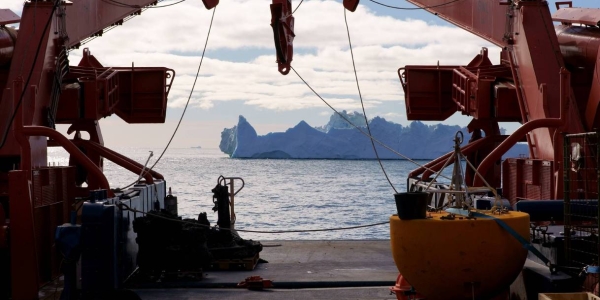
Polarstern on the PS124 expedition in the southern Weddell Sea (Photo Credit: Alfred Wegener Institute / Andreas Rogge)