Decades ago, one of the world’s largest subpopulations of nesting eider ducks spent its summers on tiny Mitivik Island, near the mouth of Hudson Bay.
Decades ago, one of the world’s largest subpopulations of nesting eider ducks spent its summers on tiny Mitivik Island, near the mouth of Hudson Bay. But as concern grew, in the 1990s, over their steep decline globally, the Canadian government set up a rudimentary research station near the island in the hopes of forestalling a collapse.
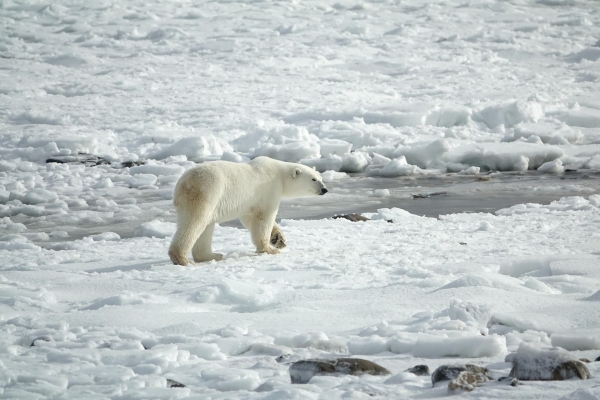
The modest investment paid enormous dividends over the next 30 years as Inuit partners from nearby Southampton Island, who hunt common and king eiders for food and feathers, worked with scientists from all over the world to solve the mystery of where the birds spent their winters and the causes of, and remedy for, their initial decline. In the field for months at a time, researchers also gained critical insights into how climate change, disease, diminishing sea ice, and polar bears were affecting bird populations.
As remarkably successful as the pioneering research station was, though, Canada’s Environment and Climate Change department quietly shut it down in 2024. By then, the number of nesting eiders had crashed again, from a high of 8,000 pairs to just a few hundred.
Read More at: Yale Environment 360
Photo Credit: mtanenbaum via Pixabay