How residential solar photovoltaic adoption can offer protection against heat-related mortality while enhancing energy security.
How residential solar photovoltaic adoption can offer protection against heat-related mortality while enhancing energy security.
Intensifying climate change has made extremely hot temperature events more frequent, representing a public health challenge. Extremely hot temperatures have also been linked to higher mortality risk. In a new study, researchers showed how residential solar photovoltaic adoption could, in addition to its environmental and energy security benefits, protect against heat-related mortality, especially among older adults, by making electricity for cooling more affordable. This new insight could lead to more targeted policies for enhancing public health.
With intensifying climate change, extreme temperatures are becoming more common across the globe. Such extreme temperatures represent an urgent public health challenge that warrants both effective environmental and energy policy. Previous studies have linked both extreme heat and extreme cold to higher mortality risks, which are projected to grow as climate change increases the frequency and severity of temperature extremes. Addressing these threats requires effective climate adaptation measures, including ways to help people maintain safe indoor temperatures.
Households commonly rely on cooling devices, such as air conditioning, to protect against temperature extremes. However, the effectiveness of this practice relies largely on energy affordability. When energy prices rise, households may opt to cut back on cooling, increasing their risk of exposure to unhealthy indoor temperatures. Increasing global energy prices, due to inflation or geopolitical issues, can further worsen this burden. Consequently, there is an urgent need for developing solutions that can ensure people’s access to effective climate control while preventing energy-related poverty.
Read More: Doshisha University
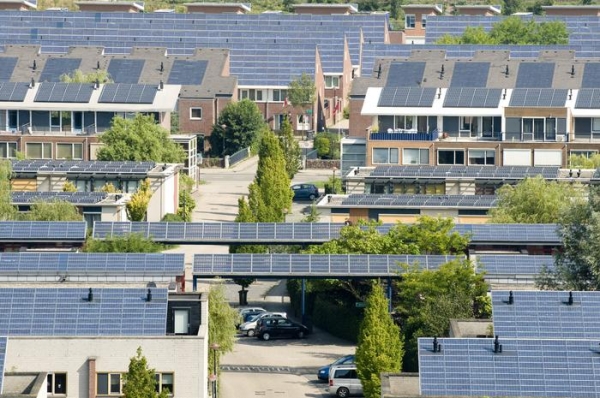
Image: Residential rooftop solar PV panels in a neighborhood setting. Distributed rooftop solar energy enables households to power essential air conditioning and maintain safe indoor temperatures during extreme heat events without facing prohibitive electricity costs. (Credit: Eneco Group from Flickr https://www.flickr.com/photos/52771707@N07/5600325194)