The potent pollution from so-called “megaconstellation” satellite systems launched en masse into space since 2019 will account for nearly half (42%) of the total climate impact of space sector pollution by the end of the decade, finds a new study led by UCL researchers.
articles
Sea Level Rise is Swallowing Mid-Atlantic Farmland Faster Than Expected, Study Finds
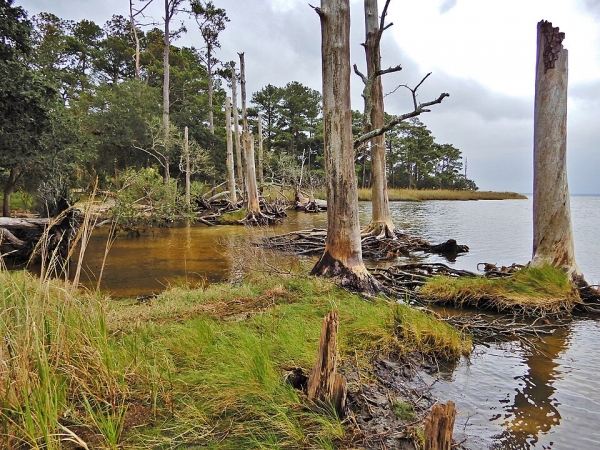
Ghost forests, the cemetery-like groupings of dead trees killed by saltwater intrusion, have become haunting symbols of sea level rise overtaking land along the Mid-Atlantic coast.
Protected Area Managers Across Europe are Adapting to Climate Change
New research shows how climate change is reshaping protected area management, though more funding and scientific knowledge are needed to facilitate the process.
Extreme Weather Events Accelerating Tidal Wetland Loss
Tidal wetlands are critical, yet vulnerable ecosystems. Tidal marshes, mangrove forests, and tidal flats support biodiversity, protect against flooding and storm surges, sequester carbon, and improve water quality.
Study Finds Wetter Storms Mean Drier Conditions Over Time
A Dartmouth study shows that annual rainfall in much of the world has consolidated over the past four decades into heavier storms with longer dry periods in between.
Combined Short-Term Effects of Air Pollutants Linked to 146,500 Premature Deaths per Year in Europe
Fine particles (PM₂.₅) were associated with around 79,000 preventable deaths, followed by nitrogen dioxide (NO₂), ozone (O₃) and coarser particles (PM₂.₅-₁₀, particles with a diameter between 2.5 and 10 micrometres).