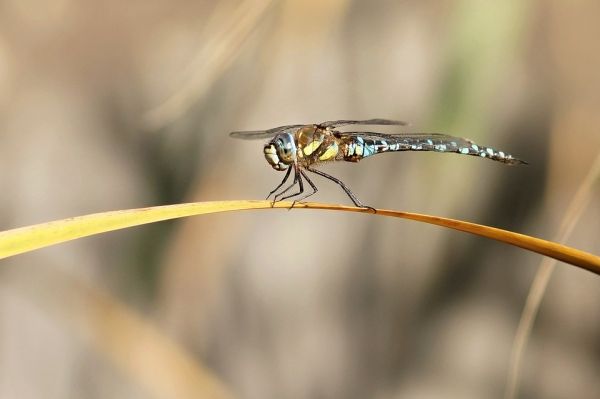
A study in the Proceedings of the National Academy of Sciences led by Michael Moore at Washington University in St. Louis finds that dragonfly males have consistently evolved less breeding coloration in regions with hotter climates.
 ENN
Environmental News Network -- Know Your Environment
ENN
Environmental News Network -- Know Your Environment

A study in the Proceedings of the National Academy of Sciences led by Michael Moore at Washington University in St. Louis finds that dragonfly males have consistently evolved less breeding coloration in regions with hotter climates.
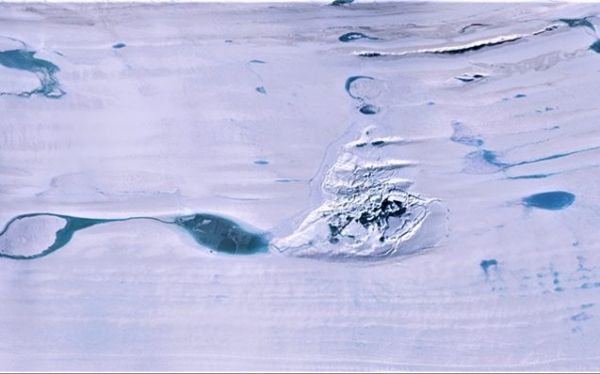
A global team of scientists has observed the sudden drainage of a large, deep, ice-covered lake within an Antarctic ice shelf—a rare phenomenon that could be interpreted as an ominous sign for the future survival of the ice sheet, and potential global sea-level rise.

Colorado researchers have published new findings in Emerging Infectious Diseases that take a first look at the use of SARS-CoV-2 mathematical modeling to inform early statewide policies enacted to reduce the spread of the Coronavirus pandemic in Colorado.

Scientists from Trinity are homing in on a recipe that would enable the future production of entirely renewable, clean energy from which water would be the only waste product.

Immunologists at St. Jude Children’s Research Hospital have identified a biological pathway that selectively controls how key immune cells, called T follicular helper cells, mature into functional components of the immune system.

The Arctic is warming at approximately twice the global rate.