A study conducted at the University of São Paulo (USP) by researchers from the Nucleus of Analysis and Synthesis of Nature-Based Solutions (BIOTA Synthesis), a FAPESP Science Center for Development (SCD), identified approximately 410,000 hectares in the state of São Paulo, Brazil, with potential for forest restoration in urban fringe areas.
A study conducted at the University of São Paulo (USP) by researchers from the Nucleus of Analysis and Synthesis of Nature-Based Solutions (BIOTA Synthesis), a FAPESP Science Center for Development (SCD), identified approximately 410,000 hectares in the state of São Paulo, Brazil, with potential for forest restoration in urban fringe areas.
These peripheral areas of urban centers are characterized by diverse land uses, such as residential neighborhoods, agricultural land, recreational spaces, urban infrastructure, and aquatic zones. They are not normally included in surveys of potential restoration areas. The findings of the study are equivalent to nearly one-third of the state’s goal of restoring 1.5 million hectares by 2050.
Read more at: Fundacao de Amparo a Pesquisa do Estado de Sao Paulo
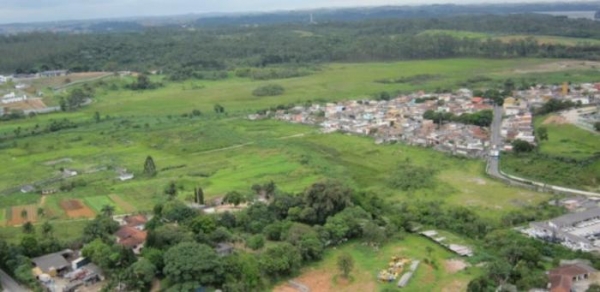
Aerial view of the Parelheiros region in the municipality of São Paulo. Urban fringes have multiple uses, including housing, forests, pastures, and food cultivation (Photo Credit: Luciana Schwandner Ferreira/BIOTA Synthesis)
https://agencia.fapesp.br/study-identifies-great-potential-for-forest-restoration-in-urban-fringe-areas/56496