A new study led by UC San Diego’s Scripps Institution of Oceanography and the Salk Institute for Biological Studies reveals the potential of a new hybrid seagrass to advance ocean restoration efforts in California and beyond.
A new study led by UC San Diego’s Scripps Institution of Oceanography and the Salk Institute for Biological Studies reveals the potential of a new hybrid seagrass to advance ocean restoration efforts in California and beyond.
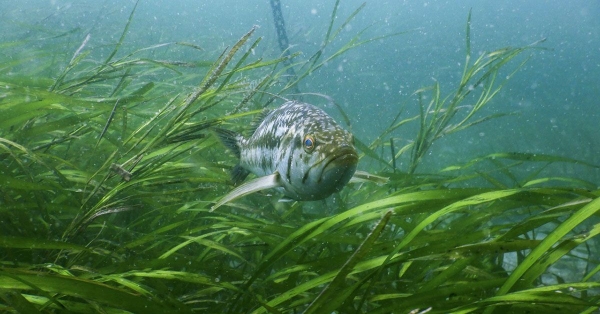
Seagrasses help preserve the ocean by offering food and shelter for sea life, calming rough waters, reducing erosion and storing excess carbon dioxide. Dozens of seagrass species protect coastlines around the globe, including the common North American eelgrass, Zostera marina.
But these beneficial underwater meadows are under threat from boating, dredging, disease and extreme weather. Restoration efforts that simply replant more eelgrasses fail around half the time, leading researchers to explore new approaches.
Read More: University of California San Diego
A kelp bass swims in the eelgrass (Zostera pacifica) off La Jolla. (Photo Credit: Pichaya Lertvilai)