A multi-year scientific expedition including the University of Hawaiʻi at Mānoa and led by researchers from the University of California, Santa Barbara and collaborating institutions, were able to find critical connections between land, rainwater and lagoon waters.
A multi-year scientific expedition including the University of Hawaiʻi at Mānoa and led by researchers from the University of California, Santa Barbara and collaborating institutions, were able to find critical connections between land, rainwater and lagoon waters.
The researchers determined that land use on tropical islands can shape water quality in lagoons and that rainfall can be an important mediator for connections between land and lagoon waters. These findings provide vital information for ecosystem stewards facing global reef decline. Their findings were published in Limnology and Oceanography.
“The links between land and sea are dynamic and complex, so it’s a topic that has remained elusive to science,” said Mary Donovan, co-author and faculty at the Hawaiʻi Institute of Marine Biology in the UH Mānoa School of Ocean and Earth Science and Technology (SOEST). “It took a dream team to pierce through that complexity. We brought together a group of interdisciplinary thinkers, from students to senior investigators, across at least five major institutions to tackle this immense challenge.”
Read more at: University of Hawaii
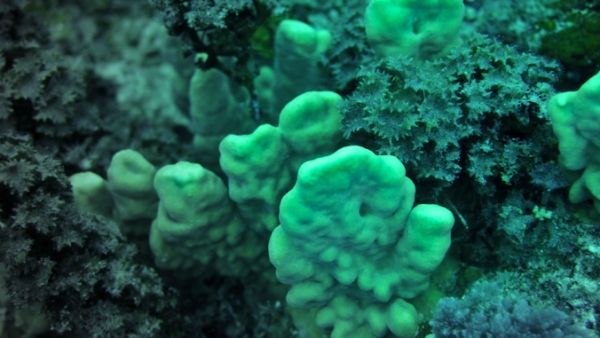
A spiky algae, seen with coral, was measured in this study. (Photo Credit: Christian John)