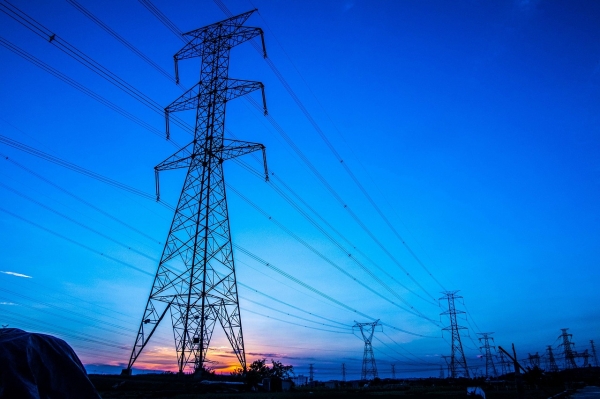
A new computer modeling tool developed by an MIT Energy Initiative (MITEI) research team will help infrastructure planners working in the electricity and other energy-intensive sectors better predict and prepare for future needs and conditions as they develop plans for power generation capacity, transmission lines, and other necessary infrastructure.
A new computer modeling tool developed by an MIT Energy Initiative (MITEI) research team will help infrastructure planners working in the electricity and other energy-intensive sectors better predict and prepare for future needs and conditions as they develop plans for power generation capacity, transmission lines, and other necessary infrastructure. The tool could reduce the amount of time this planning takes and help ensure that the power grid can continue to provide customers with efficient, reliable, and low-cost electricity that meets emissions and regulatory standards. The tool was developed as part of a philanthropically supported research project through MITEI, in collaboration with Princeton University and New York University.
Macro, the new tool, is specially designed for utility planners, regulators, and researchers who are trying to understand how electricity grids and other energy sectors might evolve given new technologies and policies or different ways of using electricity and energy-intensive commodities, explains MITEI research scientist Ruaridh Macdonald. By entering details about available generating units, projected demand, costs, possible new technologies, and potential policy constraints, planners can investigate various options for the design and operation of future infrastructure that will minimize prices and maximize value for everyone. In particular, unlike traditional models, Macro accounts for co-dependencies between industrial sectors.
With further development, Macro will enable policymakers to explore — in real time — the impacts of potential policy options on outcomes ranging from carbon emissions to grid reliability to commodity prices, and more.
Read more at: Massachusetts Institute of Technology
Photo Credit: pinkyhong138 via Pixabay