

Aviation’s climate impact extends beyond carbon dioxide emissions.
Aviation’s climate impact extends beyond carbon dioxide emissions.
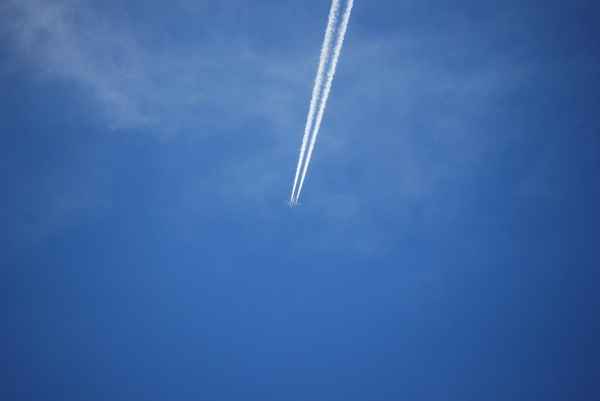
A new international study, involving researchers from Chalmers University of Technology and the University of Gothenburg, reveals that contrails can represent a significant portion of aviation’s overall climate cost – with effects that vary sharply depending on atmospheric conditions and flight paths. By analysing data from almost half a million flights, the research team has generated new insights that can support both industry and policymakers in guiding aviation towards more climate-optimised operations.
In the Nature Communications article “The social costs of aviation CO₂ and contrail cirrus” researchers Daniel Johansson, Christian Azar, Susanne Pettersson, Thomas Sterner, Marc E. J. Stettler and Roger Teoh demonstrate that both CO₂ emissions and contrail formation contribute materially to aviation’s climate impact – and that the associated societal costs differ substantially depending on weather patterns and routing decisions.
Drawing on extensive flight and meteorological data over the North Atlantic, in combination with a contrail model and an advanced climate-economy model, the researchers estimated the climate and societal cost attributable to each emission source.
Their findings indicate that strategies to reduce the impact of contrails can yield considerable climate benefits – even if such measures require rerouting flights to avoid atmospheric regions where persistent contrails may form.
Read More: Chalmers University of Technology
Photo Credit: hajninjah via Pixabay


