How the humble leafhopper’s nanoengineering could enable invisibility cloaks and next-gen sensors.
How the humble leafhopper’s nanoengineering could enable invisibility cloaks and next-gen sensors.
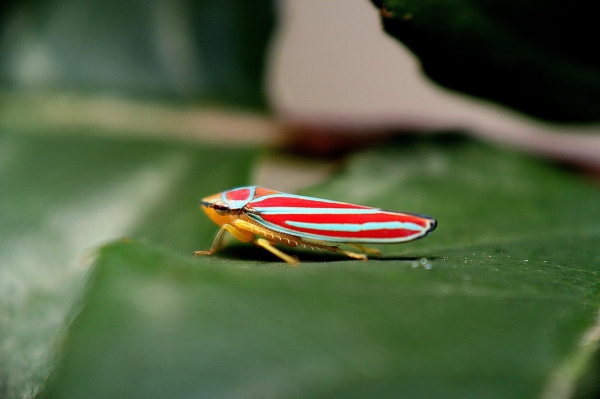
When most people see a leafhopper in their backyard garden, they notice little more than a tiny green or striped insect flicking from leaf to leaf. But these insects are actually master engineers, capable of building some of the most complex natural nanostructures known, which makes them invisible to many of their predators. Their secret lies in brochosomes: tiny, hollow nanostructures that leafhoppers naturally produce and coat themselves with. A team at Penn State has now developed a high-speed platform capable of producing synthetic versions of brochosomes at a rate exceeding 100,000 per second, a technological achievement that could lead to next-generation camouflage, sensors and other advancements for humans.
They published their work today (Dec. 12) in ACS Nano.
“Each brochosome is smaller than a speck of pollen yet has astonishingly intricate architecture, looking like a perfectly patterned soccer ball covered with nanoscale pores,” said Tak-Sing Wong, professor of mechanical engineering and biomedical engineering.
Read More: Pennsylvania State University
Photo Credit: FranciscoJavierCoradoR via Pixabay