The climate is changing and nowhere is it changing faster than at Earth’s poles.
The climate is changing and nowhere is it changing faster than at Earth’s poles. Researchers at Penn State have painted a comprehensive picture of the chemical processes taking place in the Arctic and found that there are multiple, separate interactions impacting the atmosphere.
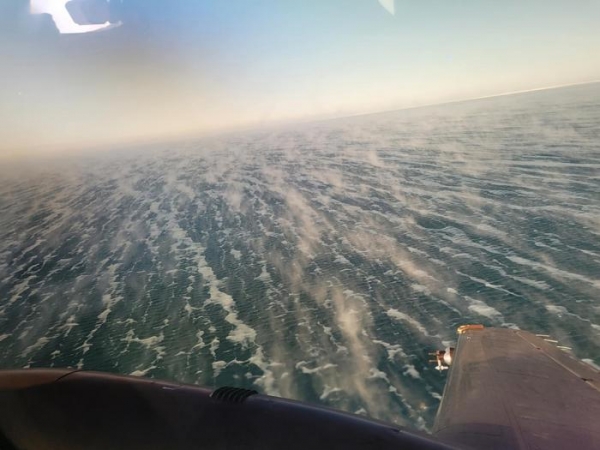
Using two instrumented planes and ground-based measurements from a two-month long field campaign to compare chemical processes in two regions in the Arctic — and the largest oil field in North America — to surrounding areas, researchers made three discoveries. The findings were: openings in the sea ice — called leads – significantly influence atmospheric chemistry and cloud formation; emissions from the oil field measurably alter regional atmospheric composition; and together, these processes contribute to a feedback loop that accelerates sea-ice melt and amplifies Arctic warming.
The research was recently published in the Bulletin of the American Meteorological Society. The work was part of a larger multi-institutional project called CHemistry in the Arctic: Clouds, Halogens, and Aerosols, or CHACHA. Led by five institutions, CHACHA examines chemical changes that occur as surface air is swept into the lower atmosphere, resulting in interactions among water particles, low clouds and pollution.
Read more at: Penn State University
Photo Credit: CHACHA research team