

Earth is taking in more energy than it releases back to space—a growing “energy imbalance” that is fueling global warming.
Earth is taking in more energy than it releases back to space—a growing “energy imbalance” that is fueling global warming. A new study led by scientists at the University of Miami Rosenstiel School of Marine, Atmospheric, and Earth Science finds that recent changes in air pollution are not the main reason this imbalance has increased.
Aerosols—tiny airborne particles from sources such as pollution, wildfires, and volcanoes—can affect how clouds form and how much sunlight Earth reflects back to space. While aerosols can influence climate regionally, the new research shows their recent global impact has been small.
Published November 28 in the journal Science Advances, the study analyzed nearly two decades of satellite observations combined with modern atmospheric reanalysis data. The researchers found that aerosol changes have affected the climate in opposite ways in the two hemispheres.
Read More: University of Miami Rosenstiel
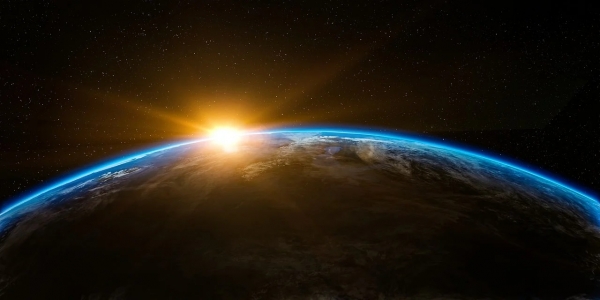
The sun’s first rays burst over the Earth’s horizon during an orbital sunrise, captured from the International Space Station above the Indian Ocean southwest of Australia. (Photo Credit: NASA)


