

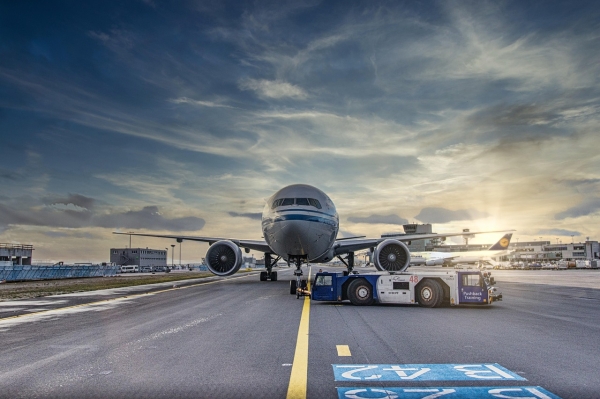
A new study co-led by the University of Oxford has found that global aviation emissions could be reduced by 50-75% through combining three strategies to boost efficiency: flying only the most fuel-efficient aircraft, switching to all-economy layouts, and increasing passenger loads. Crucially, the study shows that around a 11% reduction in global aviation emissions is achievable immediately, by using the most efficient aircraft that airlines already have more strategically on routes they already fly.
A new study co-led by the University of Oxford has found that global aviation emissions could be reduced by 50-75% through combining three strategies to boost efficiency: flying only the most fuel-efficient aircraft, switching to all-economy layouts, and increasing passenger loads. Crucially, the study shows that around a 11% reduction in global aviation emissions is achievable immediately, by using the most efficient aircraft that airlines already have more strategically on routes they already fly.
Published today in Nature Communications Earth & Environment, the researchers analysed more than 27 million commercial flights in 2023, covering 26,000 city pairs and nearly 3.5 billion passengers. This revealed enormous variability in emissions efficiency, with some routes producing nearly 900 grams of CO₂ per kilometre for each paying passenger - almost 30 times higher than the most efficient, at around 30 grams of CO₂ per kilometre.
Globally, average aviation emissions were 84.4 grams of CO₂ per kilometre for each paying passenger in 2023. But the study identifies three practical levers to reduce this figure: operating only the most fuel-efficient aircraft, removing premium-class seating to carry more passengers, and raising passenger loads to 95%.
Read more at: University of Oxford
Photo Credit: TobiasRehbein via Pixabay


