

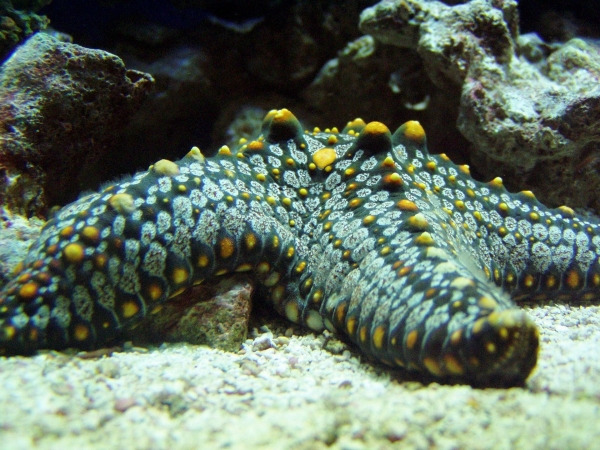
It started in the summer of 2013. Sea stars were dying in huge numbers in Washington State’s Olympic National Park: They became covered in white lesions.
It started in the summer of 2013. Sea stars were dying in huge numbers in Washington State’s Olympic National Park: They became covered in white lesions. Then their limbs contorted and fell off, leaving their bodies to disintegrate into a pile of white goo. “They looked like they were melting,” says Pete Raimondi, an ecologist at the University of California, Santa Cruz and head of the Multi-Agency Rocky Intertidal Network, a consortium of research groups.
The problem spread to sites as far south as Baja California and north to Alaska. Sea stars from more than 20 species were affected, including common five-armed ochre stars in tide pools and sunflower stars — beasts the size of a hula hoop with up to 24 arms — that live mostly in the subtidal zone. It hit aquariums, too: The Vancouver and Seattle aquariums lost almost all their sea stars, some of which were 40 years old. Over a dozen years, billions of sea stars perished, with 90 percent of some local populations wiped out.
“Sea star wasting disease” has been called the largest wild marine epidemic of all time. More than a decade since the syndrome was first identified, sunflower sea stars are still critically endangered. While other sea star species are recovering in some places, wasting persists at low levels around the world. And researchers are worried that wasting could come back, hard.
Read More: Yale Environment 360
Photo Credit: mrpenguine via Pixabay


