

Large-scale melting of the Greenland Ice Sheet is irreversible and happening at a rapid rate, and now a new international study is the first to understand why.
Large-scale melting of the Greenland Ice Sheet is irreversible and happening at a rapid rate, and now a new international study is the first to understand why.
A University of Waterloo scientist and a team of international collaborators found that airborne mineral dust and other aerosols are directly connected to how much algae grows on the ice. The algae interfere with albedo, or the reflection of the sun’s rays, exacerbating melting.
As one of the fastest-melting cryosphere regions in the world, the Greenland ice sheet is an area of great significance, and understanding the factors driving its melt helps predict its contribution to future sea-level rise.
Read more at: University of Waterloo
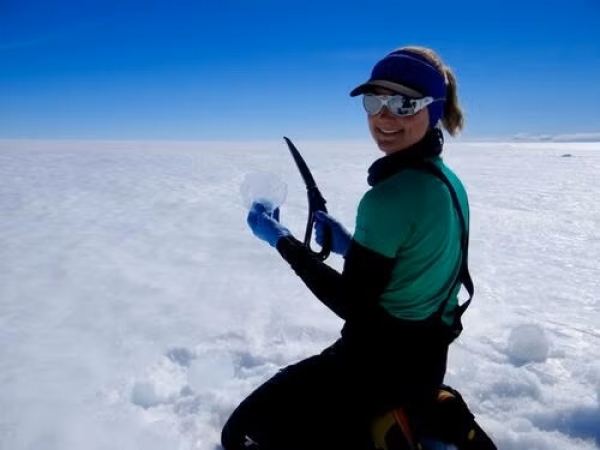
Dr. Jenine McCutcheon samples an ice core. (Photo Credit: University of Waterloo)


