

Wetlands make up only about six percent of the land area but contain about 30 percent of the terrestrial organic carbon pool.
Wetlands make up only about six percent of the land area but contain about 30 percent of the terrestrial organic carbon pool. Therefore, CO2 emissions from wetlands are central to the global climate balance. In Denmark, the plan is to flood 140,000 hectares of low-lying land such as bogs and meadows as part of the Green Tripartite Agreement.
Flooding such areas will slow down the decomposition of organic material in the soil and keep the CO2 in the soil rather than allowing it to be released to the atmosphere and contribute to the greenhouse effect. At least, that has been the rationale until now.
However, a new study from the University of Copenhagen, published in Nature Communications Earth & Environment, shows that this is not the best solution for the climate. By completely flooding low-lying areas, the optimal conditions are created for the formation of methane – a greenhouse gas that is up to 30 times more harmful to the climate than CO2.
Read More: University of Copenhagen
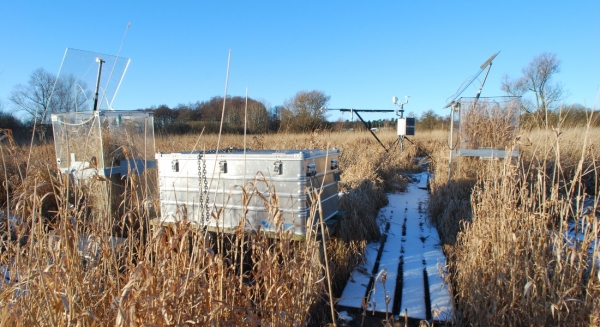
New knowledge is based on measurements and modeling in Maglemosen, a wetland located 20 kilometers north of Copenhagen, which has been undisturbed for more than 100 years and in many ways represents a typical Danish wetland with peat soils. (Photo Credit: Bo Elberling)


