

Rice University biologist Amy Dunham has spent decades studying the mountainous rainforests of Madagascar’s Ranomafana National Park, a UNESCO World Heritage site that was designated a national park in 1991.
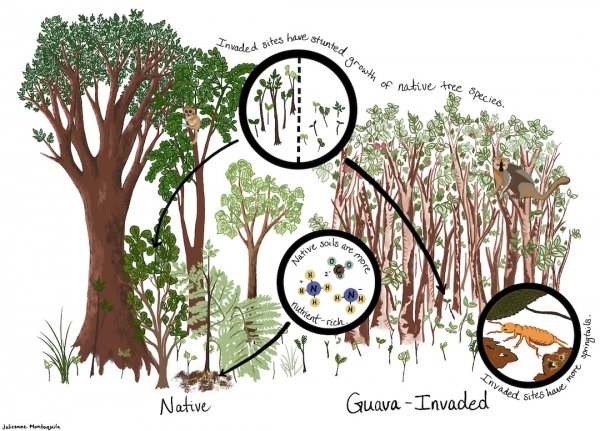
Rice University biologist Amy Dunham has spent decades studying the mountainous rainforests of Madagascar’s Ranomafana National Park, a UNESCO World Heritage site that was designated a national park in 1991. In a project co-led by Dunham and Rice’s Matt McCary together with a team of U.S. and Malagasy researchers, the group recently published a study showing that strawberry guava, an invasive plant, can prevent natural forest generation in areas of Ranomafana with a history of past disturbance, even decades after deforestation has stopped.
Native to Brazil, strawberry guava was introduced to Madagascar during the colonial era in the 1800s. Its tall woody stems make excellent construction materials, while its fruits are enjoyed by humans and animals alike. In fact, lemurs, the beloved, endangered ambassadors of Madagascar’s incredibly diverse ecosystem, are often seen snacking on the red fruits. A disturbance-favoring plant, strawberry guava takes hold easily in areas where the rainforest canopy is damaged, often through deforestation. And as Dunham observed, once strawberry guava becomes established, the rainforest’s recovery often stalls, even after many decades.
Read More: Rice University
Native rainforests versus guava-invaded sites. Insets show some of the differences found by researchers in this study. (Photo Credit: Julieanne Montaquila/Rice University)


