

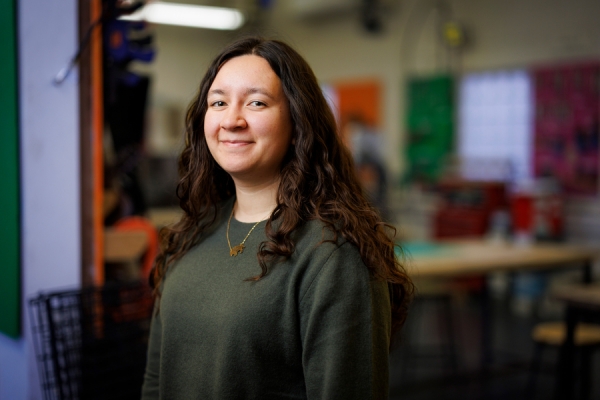
Through research with MIT D-Lab, MIT engineering student Kiyoko “Kik” Hayano worked with Keo Fish Farms to build a model for regenerative water systems.
Through research with MIT D-Lab, MIT engineering student Kiyoko “Kik” Hayano worked with Keo Fish Farms to build a model for regenerative water systems.
In many academic circles, innovation is imagined as a lab-to-market pipeline that travels through patent filings, venture rounds, and coastal research hubs. But a growing movement inside U.S. universities is pushing students toward a different frontier: solving real engineering problems alongside rural communities whose challenges directly shape national food security.
A compelling example of this shift can be found in the story of Kiyoko “Kik” Hayano, a second-year mechanical engineering student at MIT, and her work through MIT D-Lab with Keo Fish Farms, a commercial aquaculture operation in the Arkansas Delta.
Hayano’s journey — from a small, windswept town in rural Wyoming to MIT’s campus in Cambridge, Massachusetts, and on to a working Arkansas fish farm — offers a tangible glimpse into how applied engineering, academic partnerships, and on-the-ground innovation can create new models for regenerative agriculture in the United States.
Read More: Massachusetts Institute of Technology (MIT)
Image: Caption:Kiyoko “Kik” Hayano, a second-year mechanical engineering student at MIT, worked with Keo Fish Farms through MIT D-Lab to help find solutions to local water-quality challenges. “It opened my eyes to how engineering can support sustainable food systems and rural communities,” she says. (Credits:Photo: Adam Glanzman)


