Florida Atlantic University’s Harbor Branch Oceanographic Institute has been awarded a grant from Blue Carbon Plus (BC+) to explore sustainable, market-driven aquaculture opportunities in The Bahamas and elsewhere.
Florida Atlantic University’s Harbor Branch Oceanographic Institute has been awarded a grant from Blue Carbon Plus (BC+) to explore sustainable, market-driven aquaculture opportunities in The Bahamas and elsewhere. BC+ is a collaboration between Conservation International and The Nature Conservancy. Spearheaded through its Queen Conch Lab, FAU Harbor Branch has launched a 12-month feasibility study, funded by BC+, to assess the commercial viability of queen conch aquaculture.
The project aims to develop a scalable farming model capable of producing high-quality, marketable conch products while simultaneously enhancing the seagrass meadows that sustain this culturally and ecologically important Caribbean species.
The study titled, “Determining the Commercial Viability of Conch Aquaculture and its Seagrass Impact,” will evaluate how science-based aquaculture can strengthen both local economies and marine ecosystems.
Read More at: Florida Atlantic University
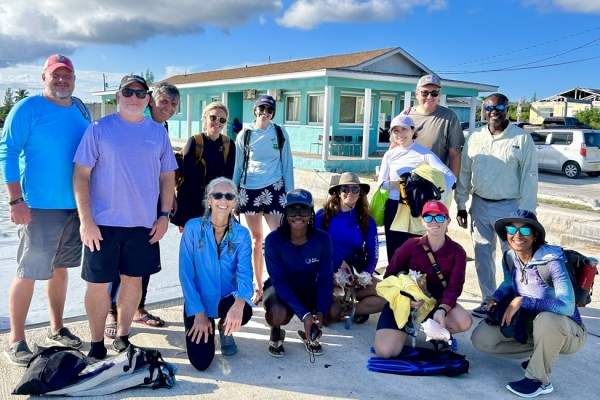
Representatives from FAU, Blue Carbon Plus, Innovasea, and Tidepoint Group conducting a site visit with local partners Blue Action Lab and community members to natural queen conch seagrass nursery areas on Grand Bahama. (Photo Credit: FAU Queen Conch Lab)