

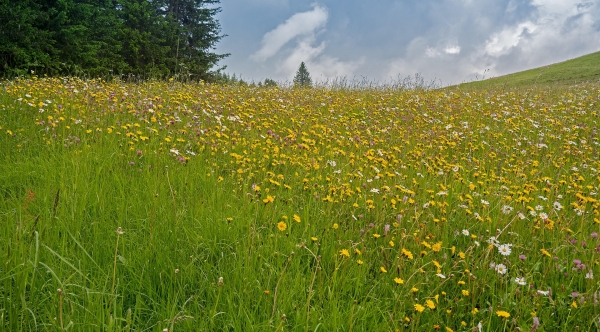
In the longest-running field warming experiment of its kind, researchers have documented dramatic shifts in high-elevation mountain meadows, revealing that changes in climate alter not only the plants we can see above ground, but the invisible world of fungi and microbes in the soil below.
In the longest-running field warming experiment of its kind, researchers have documented dramatic shifts in high-elevation mountain meadows, revealing that changes in climate alter not only the plants we can see above ground, but the invisible world of fungi and microbes in the soil below.
The results, published in an article in The Proceedings of the National Academy of Sciences and co-led by University of Michigan researcher Aimée Classen, show that sustained warming is causing meadows to undergo “shrubification,” a transition from diverse grasslands and flowering plants to shrub-dominated landscapes, and that the ecosystem belowground is responding in kind.
Specifically, while the meadows changed from grasslands to shrublands, the types of fungi associated with plant roots in the soil beneath the meadows changed as well. In the original grassland ecosystem, plants relied heavily on mycorrhizal fungi—beneficial partners that help plants absorb water and nutrients from the soil in exchange for carbon. Under warming conditions, however, these mutualistic relationships declined dramatically, and soil saprotrophic fungi, which are involved in the decomposition of organic matter, increased.
“It’s a shift from a meadow that eagerly chases resources to a shrub land holding onto nutrients tightly,” said Classen, study co-principal investigator, professor of ecology and evolutionary biology and director of the U-M Biological Station. “In addition, warming is uncoupling the intricate connections between plants and soil fungi. When these connections fray, the ecosystem begins to change, not just in who lives there, but also how energy and nutrients move through the system and what it can provide to wildlife and people.”
Read More: University of Michigan
Photo Credit: adege via Pixabay


