

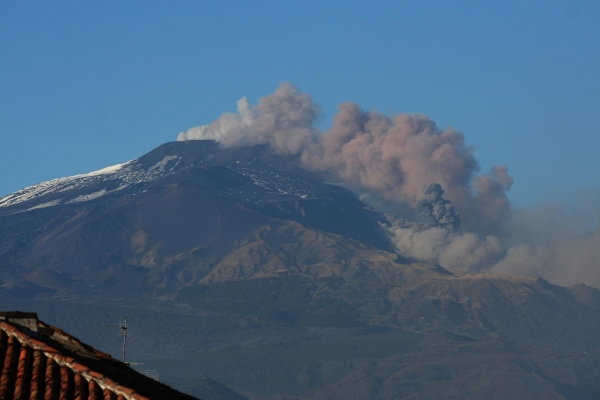
Volcanoes and wildfires can inject millions of tons of gases and aerosol particles into the air, affecting temperatures on a global scale.
Volcanoes and wildfires can inject millions of tons of gases and aerosol particles into the air, affecting temperatures on a global scale. But picking out the specific impact of individual events against a background of many contributing factors is like listening for one person’s voice from across a crowded concourse.
MIT scientists now have a way to quiet the noise and identify the specific signal of wildfires and volcanic eruptions, including their effects on Earth’s global atmospheric temperatures.
In a study appearing this week in the Proceedings of the National Academy of Sciences, the researchers report that they detected statistically significant changes in global atmospheric temperatures in response to three major natural events: the eruption of Mount Pinatubo in 1991, the Australian wildfires in 2019-2020, and the eruption of the underwater volcano Hunga Tonga in the South Pacific in 2022.
Read More: Massachusetts Institute of Technology
Photo Credit: AntoMes via Pixabay


