Alaska’s glaciers respond to climate change by melting for three additional weeks with every 1 degree Celsius increase in the average summer temperature, data from satellite-mounted radars show.
Alaska’s glaciers respond to climate change by melting for three additional weeks with every 1 degree Celsius increase in the average summer temperature, data from satellite-mounted radars show.
A single degree Celsius equates to 1.8 degrees Fahrenheit.
Work by scientists at Carnegie Mellon University and the University of Alaska Fairbanks also shows that synthetic aperture radar, or SAR, can consistently and automatically monitor glaciers and their snowlines year-round. Those are usually only gauged at the end of the melt season using optical instruments.
SAR data is also more reliable than traditional surface-based optical instruments.
Read More at: University of Alaska Fairbanks
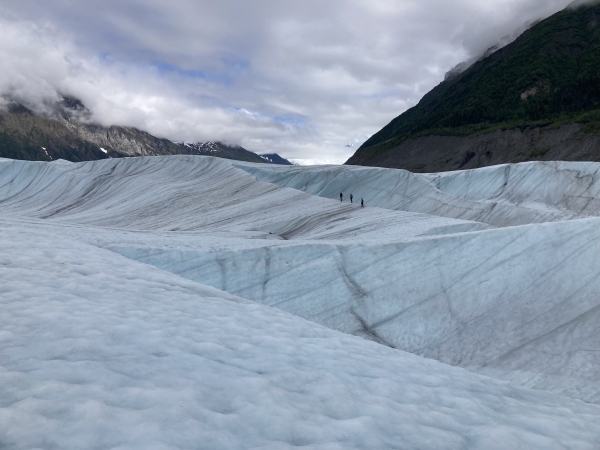
Participants in a 2022 international glaciology summer school walk on Root Glacier near McCarthy, Alaska, in 2022. (Photo Credit: Albin Wells)