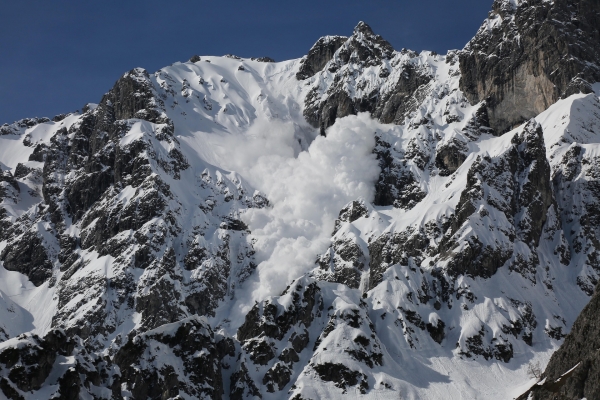
This winter was one of the warmest on record across the West; as a result, many snowy, alpine areas have seen bouts of winter rainfall where there would ordinarily only be snow.
This winter was one of the warmest on record across the West; as a result, many snowy, alpine areas have seen bouts of winter rainfall where there would ordinarily only be snow. These unusual weather patterns have contributed to an abysmal ski season, but they can also set the stage for dangerous avalanches. At temperatures close to freezing, precipitation can fall as rain but freeze when it hits the snow, forming an icy crust. Snow that accumulates on top of that crust is unstable and prone to abrupt slides, causing an avalanche that can close down a major highway in moments, endanger backcountry skiers and more.
Avalanche experts in Western Washington know how to manage the risks associated with rain-on-snow events, but many of their counterparts in colder regions like Eastern Washington, Idaho and Montana are less familiar with these dynamics. New research from the University of Washington shows that as winters in these regions warm, their snowpacks may come to resemble those of maritime areas, with more rain-on-snow events, icy crusts and complex avalanche forecasting.
The findings were published February 25 in ARC Geophysical Research.
Read More: University of Washington
Photo Credit: _anaposa_ via Pixabay