

New research led by scientists at UC San Diego’s Scripps Institution of Oceanography is shining a spotlight on one of the ocean’s most overlooked habitats: seagrass.
New research led by scientists at UC San Diego’s Scripps Institution of Oceanography is shining a spotlight on one of the ocean’s most overlooked habitats: seagrass.
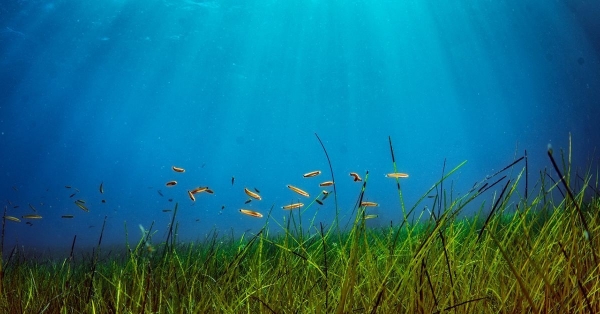
Led by Scripps Oceanography PhD candidate Rilee Sanders and supported by The Bay Foundation, Paua Marine Research Group, USC Wrigley Institute for Environment and Sustainability and Pacific Marine and Estuarine Fish Habitat Partnership, the study documented the first successful restoration of open-coast seagrass (common eelgrass). The findings offer promising insight into the feasibility of restoring high-value coastal habitats in the future.
Seagrasses act as ecosystem engineers, creating complex underwater habitats that support life along the coast. Around the world, these habitats are increasingly threatened by climate change and human impacts like coastal development, invasive species and overfishing.
Read more at: University of California San Diego
Juvenile señorita (Oxyjulis californica) utilize the protective canopy of the open-coast seagrass restoration site at Button Shell, Catalina Island. (Photo Credit: Adam Obaza/Paua Marine Research Group)


