

Climate change may reduce yields of crops like corn and soybeans, but it can also give some plants an edge.
Climate change may reduce yields of crops like corn and soybeans, but it can also give some plants an edge.
That’s one of the takeaways of a recent study of tall goldenrod, a common wildflower that runs rampant in fields across its native range in North America and other parts of the world where it has been introduced.
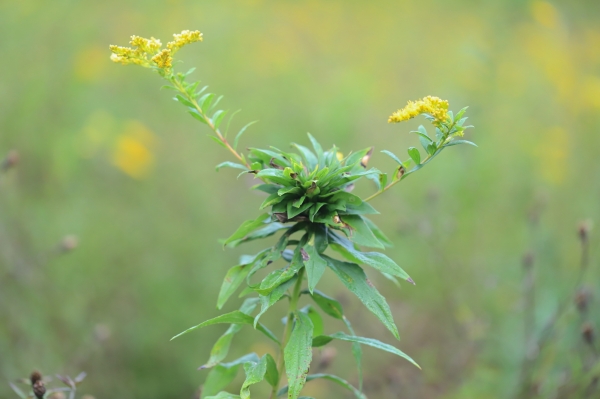
Many goldenrod plants are pocked by tumorlike growths, called galls, that form when insects trick the plant into building a nursery for their larvae. New research suggests that climate change can offset some of the harmful effects of these insect squatters — effects that would otherwise help keep goldenrod plants in check.
Read More: Michigan State University
The tuft of leaves on this goldenrod plant is caused by tiny fly that uses the plant as a nursery. (Photo Credit: Steven Bodzin)


