When extreme weather looms, timely and accurate warnings can give people the chance to adjust their plans, brace for danger and, in the most severe cases, make decisions that keep them safe.
When extreme weather looms, timely and accurate warnings can give people the chance to adjust their plans, brace for danger and, in the most severe cases, make decisions that keep them safe. Does that mean improving weather forecasts could save more lives in a warming climate?
Derek Lemoine, Arizona Public Service professor of economics at the University of Arizona Eller College of Management, is part of a team that recently answered that question. The team's research, published in the journal PNAS, suggests that improving short-term temperature forecasts in alignment with expert predictions of technological development could reduce U.S. mortality from heat by 18% to 25% in the year 2100.
"That could offset the extra heat-related deaths caused by climate change," Lemoine said. "To be clear, we would still rather not experience the climate change – but at least we can find ways to potentially cancel out the increased mortality. While extreme cold is very deadly, people primarily use weather forecasts to avoid the heat. Considering climate change will increase the frequency of extreme heat, accurate weather forecasts will become more valuable."
Read More: University of Arizona
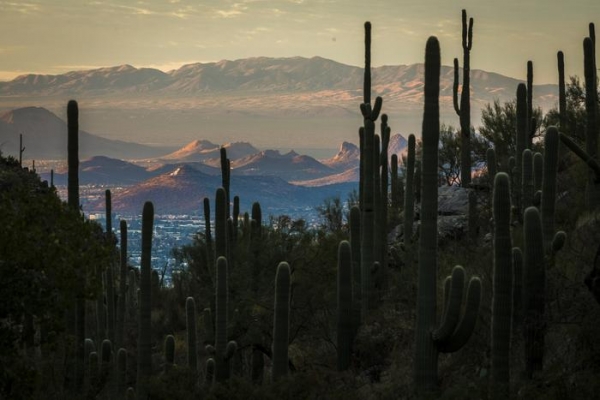
Image: Depending on the range of technological improvements and climate change, researchers found that improving short-term temperature forecasts in alignment with expert predictions of technological development could reduce U.S. mortality from heat by 18% to 25% in the year 2100. (Credit: Chris Richards/University of Arizona Communications)