

New study finds that many of the state’s valuable and most recognizable trees could decline sooner than expected because current risk calculations don’t incorporate climate change.
New study finds that many of the state’s valuable and most recognizable trees could decline sooner than expected because current risk calculations don’t incorporate climate change.
From the scarecrow-like silhouettes of Joshua Tree National Park to the fog-shrouded Redwood Coast of Mendocino and Humboldt counties, California’s identity is deeply rooted in its trees. However, a new study led by researchers at the University of California, Santa Cruz, warns that these foundational species are in much more trouble than international conservation rankings estimate.
The study, published on April 24 in journal Global Change Biology, reveals that over the next century, California’s endemic and near-endemic trees are projected to lose between half and three-quarters of their climatically suitable habitat. Perhaps most strikingly, the research demonstrates that the trees’ current conservation status on the globally authoritative International Union for Conservation of Nature (IUCN) Red List don’t yet reflect this imminent risk.
Read More: University of California - Santa Cruz
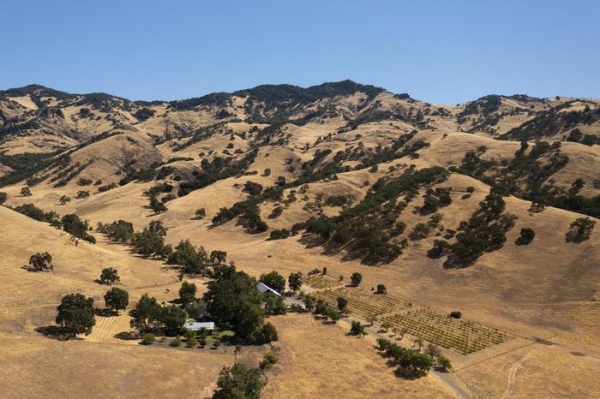
Image: The blue oak, an iconic tree found only in California and seen across the state’s inland ranges and hills, is far more vulnerable to climate change than is reflected by its current status on the International Union for Conservation of Nature's "Red List," according to a new climate-informed risk-assessment framework developed by UC Santa Cruz researchers. (Credit: Photo by Nick Gonzales)


