

The research, led by the University of Bristol in collaboration with international scientists and published in PNAS today [insert date], analysed more than 900 fossil deep-sea stony corals collected from depths of up to 1,000 metres.
The research, led by the University of Bristol in collaboration with international scientists and published in PNAS today [insert date], analysed more than 900 fossil deep-sea stony corals collected from depths of up to 1,000 metres. Using uranium-thorium dating, researchers reconstructed a 117,000-year history of deep-water coral ecosystems in the Galápagos region—one of the most detailed records of its kind.
Because they grow in deeper, darker parts of the ocean, deep-sea coral reefs have been significantly understudied compared to their tropical counterparts, but are still key biodiversity hotspots that host a rich variety of fish and invertebrate life.
Remarkably, the study found that these deep coral ecosystems that persisted through major global climate events over tens of thousands of years, including the last Ice Age and subsequent warming experienced a striking disruption around 5,000 years ago, when corals vanished from the record for more than a millennium.
Read more at: University of Bristol
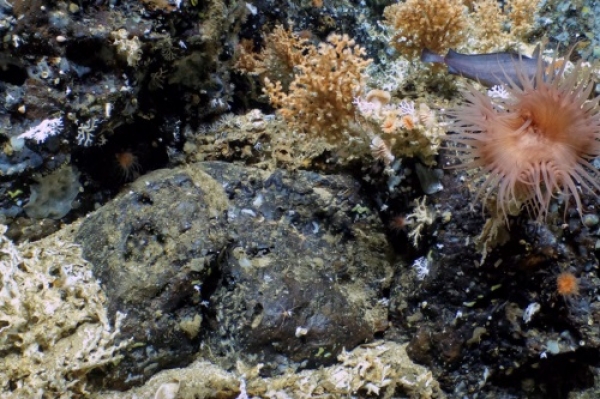
Scientists have discovered extensive, ancient and modern deep-sea coral reefs within the Galápagos Marine Reserve (GMR) – the first of their kind ever to be documented inside the marine protected area (MPA) since it was established in 1998 (Photo Credit: WHOI/NSF)


