The study, led by the University of Cambridge with collaborators from the University of California and published in the journal Communications Earth & Environment, compiled long-term ocean measurements collected by ships and robotic floating devices to show that a warm mass called circumpolar deep water has expanded and shifted toward the Antarctic continental shelf over the past 20 years.
The study, led by the University of Cambridge with collaborators from the University of California and published in the journal Communications Earth & Environment, compiled long-term ocean measurements collected by ships and robotic floating devices to show that a warm mass called circumpolar deep water has expanded and shifted toward the Antarctic continental shelf over the past 20 years.
Previously, scientists hadn’t had enough ocean observations to detect the warming trend. “It’s concerning because this warm water can flow beneath Antarctic ice shelves, melting them from below and destabilising them,” said Joshua Lanham, lead author of the study from Cambridge's Department of Earth Sciences.
Ice shelves play an important role in holding back Antarctica’s inland ice sheets and glaciers, which collectively hold enough freshwater to raise sea level by about 58 metres.
Read more at: University of Cambridge
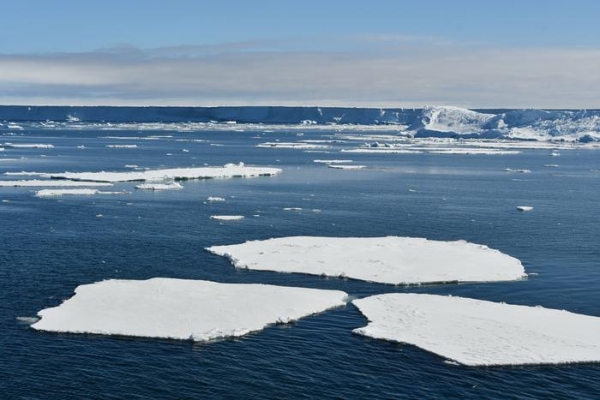
Bellinghausen Sea, Antarctica, taken onboard the R/V Falkor (too) in 2025 (Photo Credit: Laura Cimoli, University of Cambridge)