

The research originated in a project aimed at developing biofuels for ships but has since evolved into an environmentally friendly method for wood preservation.
The research originated in a project aimed at developing biofuels for ships but has since evolved into an environmentally friendly method for wood preservation. The path to new inventions is rarely straight or predictable, and this has certainly been the case for University of Copenhagen researchers Emil Thybring and Sune Tjalfe Thomsen. For several years, they have been working on a new, sustainable way to impregnate wood without harming the environment.
Today, the wood industry treats timber with heavy metals such as copper to extend its lifespan when used as a construction material. In the pressure treatment process, water with dissolved preservation chemicals is forced into the wood. The problem is that a large proportion of these substances is later leached out when the wood is exposed to rain, ultimately ending up in soil, marine environments and drinking water.
“The toxic substances we introduce into the wood using water to make it last longer also leave the wood with water and end up in nature. It is a serious problem, and one we aim to solve with our technology,” says Emil Thybring, associate professor at the Department of Geosciences and Natural Resource Management.
Read More at: University of Copenhagen
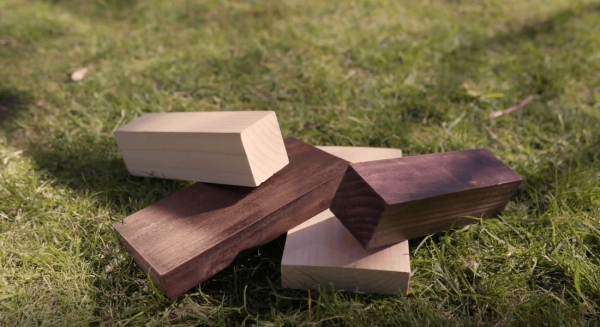
Hyperlignification gives the wood a brown coloration. The researchers are working on controlling the degree of coloration. At the same time, it avoids the acid-green color known from pressure-treated wood found in hardware stores, where heavy metals such as copper are used. (Photo Credit: Sune Tjalfe Thomsen)


