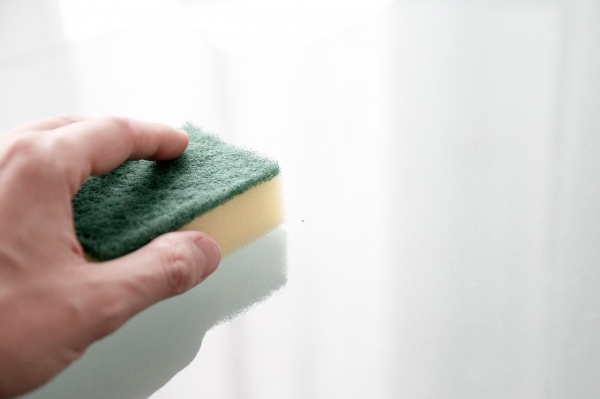
Kitchen sponges are among the most frequently used household items – and may also represent a previously underestimated source of microplastics.
Kitchen sponges are among the most frequently used household items – and may also represent a previously underestimated source of microplastics. Researchers led by the University of Bonn investigated how many plastic particles are released from sponges during dishwashing and their environmental impacts. The findings show that while measurable amounts of microplastics enter the environment each year, the largest share of environmental impact from manual dishwashing is caused by water consumption.
What is the Study About?
Kitchen sponges are considered a potential, yet largely understudied, source of microplastics in households. The study investigated how many microplastic particles are released from kitchen sponges during use and what environmental impacts result. The aim was to quantify the actual release under realistic usage conditions and to assess the environmental impacts using a life cycle assessment (LCA).
How Did You Conduct Your Study?
The study combined citizen science—where members of the public actively conduct experiments—with laboratory tests. Volunteer households in Germany and North America used one of three different sponge types in their daily routines and documented their usage. The sponges were weighed before and after use to determine material loss and microplastic release. In addition, laboratory experiments were carried out using an automated test device (“SpongeBot”) that simulates the mechanical stress applied to sponges during dishwashing.
Read More: University of Bonn
Photo Credit: jarmoluk via Pixabay