

Astronauts on long space missions may one day use plants to produce fresh stocks of medicines on demand, thanks to new research by engineers at the University of California San Diego.
Astronauts on long space missions may one day use plants to produce fresh stocks of medicines on demand, thanks to new research by engineers at the University of California San Diego. The team developed a simple method to grow and repeatedly harvest pharmaceuticals from plants under space-like conditions, without destroying the plants or generating large amounts of waste. The method could also help bring low-cost pharmaceutical production to resource-limited areas on Earth.
The findings were published on June 5 in npj Science of Plants.
One of the biggest challenges of space travel is keeping astronauts supplied with safe, effective medications. Many drugs degrade more quickly in space. Even aboard the International Space Station, more than half of the medications stocked there have been found to expire within three years. That’s barely long enough for a trip to Mars, which can take around 200 days each way. Regularly resupplying medications simply isn’t feasible millions of miles from Earth.
Plants offer a promising solution because they can act as mini factories for pharmaceuticals.
Read More: University of California – San Diego
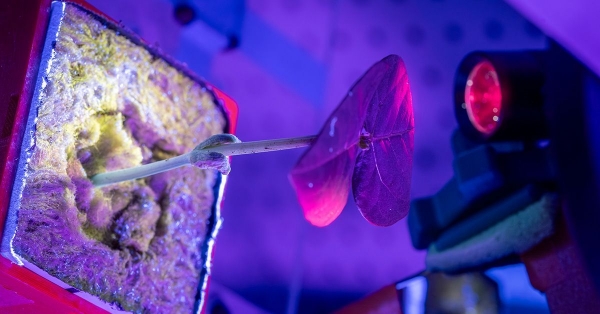
Image: UC San Diego engineers are growing plants in simulated space conditions to explore their potential for producing pharmaceuticals in space. (Photo by David Baillot/UC San Diego Jacobs School of Engineering)


