

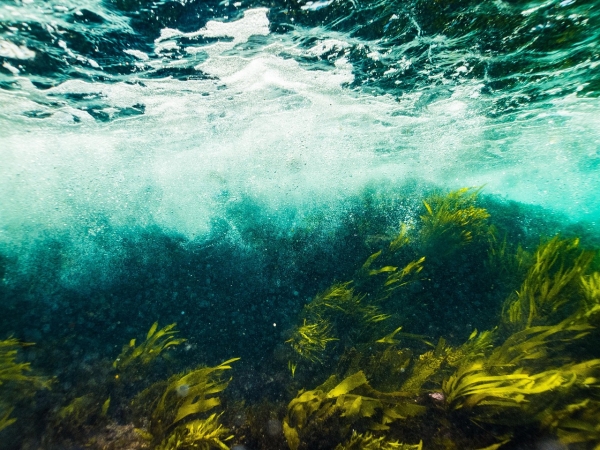
At one time, kelp forests — which shelter fish, slow erosion, and sequester carbon — grew along a third of the world’s coastlines.
At one time, kelp forests — which shelter fish, slow erosion, and sequester carbon — grew along a third of the world’s coastlines. Now, scientists are working to bolster heat-stressed kelp by attacking the urchins that prey on them and transplanting hardier kelp varieties.
In the coastal waters off British Columbia, tribal volunteers from the Haida Nation dive for purple sea urchins amid a dense forest of rippling golden-brown kelp fronds. Sunlight filters through the canopy, creating a mesmerizing dance of light and shadow, as rays and sea lions wend through the kelp maze, sharks glide past, and bright orange garibaldis dash between the swaying fronds.
Kelp forests are biodiversity hotspots teeming with a colorful variety of seaweeds, sponges, crustaceans, and other small ocean animals, many of them found nowhere else. At one time, vast kelp beds grew in nutrient-rich shallow waters along roughly a third of the world’s coastlines, where they helped to reduce the strength of waves, minimized coastal erosion, and provided shelter to fish, invertebrates, and marine mammals.
Today, however, many kelp forests are on life support, victims of water pollution from terrestrial agriculture and coastal development, bottom trawling for fish, and an explosion of kelp-devouring urchins, like those the Haida volunteers are collecting as part of an eradication program. But perhaps the most important driver of kelp decline is the rapid warming of the ocean.
Read More: Yale Environment 360
Photo Credit: Serpae via Pixabay


