

Alaska kelp farms, which have been viewed as a potential boon for reducing local carbon dioxide levels, have surprisingly murky effects on atmospheric CO2 removal, according to a new study.
Alaska kelp farms, which have been viewed as a potential boon for reducing local carbon dioxide levels, have surprisingly murky effects on atmospheric CO2 removal, according to a new study.
A University of Alaska Fairbanks-led project measured the amount of CO2 that was emitted and absorbed at two kelp farms in the Gulf of Alaska during the 2023-2024 growing season. The outcome was mixed — one farm slightly reduced carbon dioxide in the local environment while the other added more to it.
Marine carbon dioxide removal (mCDR) has been touted as a potential strategy to reduce atmospheric carbon dioxide levels, with the ocean serving as a sink for human-produced CO2.
Read More at: University of Alaska Fairbanks
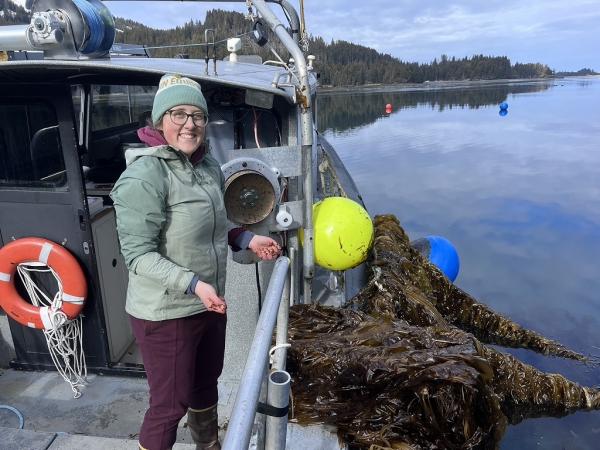
Josianne Haag recovers a mooring in a kelp farm in Jakolof Bay, Alaska. (Photo Credit: Amanda Kelley)


