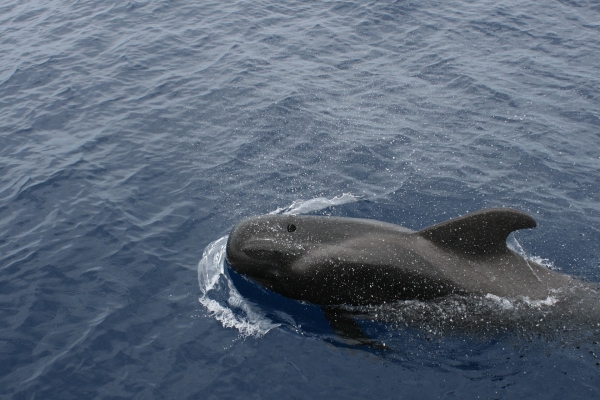
A single monitoring network developed by McGill, Natural Resources Canada, Université du Québec à Montréal (UQAM) and Dalhousie University researchers can simultaneously track earthquakes, water behaviour, human activity and whales, providing a comprehensive picture of what’s happening in, under, and at far distances from the water.
A single monitoring network developed by McGill, Natural Resources Canada, Université du Québec à Montréal (UQAM) and Dalhousie University researchers can simultaneously track earthquakes, water behaviour, human activity and whales, providing a comprehensive picture of what’s happening in, under, and at far distances from the water.
The researchers’ experimental network, installed in the Lower St. Lawrence, detected twice as many earthquakes as the National Earthquake Monitoring System, while also capturing whale calls, ship noise, tidal activity and mining blasts.
The system combines tools known as “ocean bottom seismometers” from the National Facility for Seismological Investigations with coastal and land-based stations to monitor activity across the estuary.
Read More: McGill University
Photo Credit: marcitekturei via Pixabay