International study identifies an ancient pattern as a warning sign for the consequences of today’s global warming.
International study identifies an ancient pattern as a warning sign for the consequences of today’s global warming.
Whether mussels, crustaceans or fish: Marine animals have been responding to environmental crises with a reduction in their body size for hundreds of millions of years. A new study by Friedrich‑Alexander Universität Erlangen-Nürnberg (FAU) in conjunction with the Universities of Warsaw and Lille now shows that this phenomenon, known as the “Lilliput effect”, is especially pronounced during phases of strong global warming. The researchers see it as a warning signal regarding changes to today’s climate. The results suggest that the current warming will cause marine organisms to shrink.
For the study, the research team analyzed almost 9,000 size changes from fossil, historical and modern analyses. This allowed changes in body size in marine animals over a span of roughly 450 million years to be compared.
Read More: Friedrich-Alexander-Universität Erlangen-Nürnberg
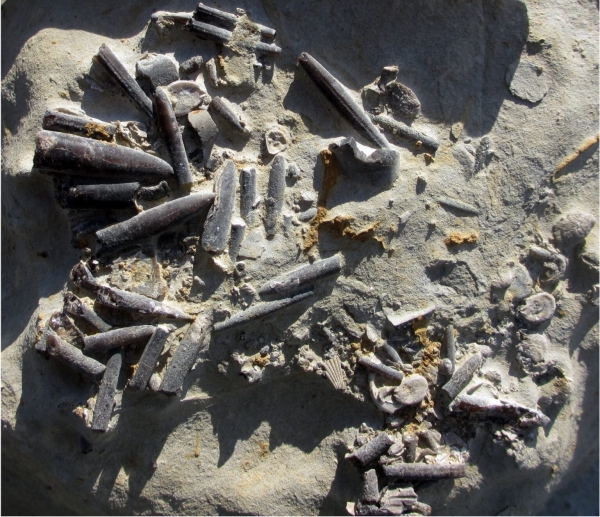
Image: Die Belemniten (Kopffüßer aus dem Mesozoikum) im Bild stammen aus Peniche in Portugal. Sie lebten während einer Wärmekrise vor ca. 183 Millionen Jahren und sind nur halb so groß wie ihre Artgenossen direkt vor und nach der Krise. (Foto: Kenneth De Baets)